
Business expansion often brings new opportunities, but it also introduces financial risk. Many companies focus on growth potential without fully understanding the cost structure behind expansion decisions. This can lead to increased expenses without corresponding profitability. This is where break-even analysis becomes essential.
It helps businesses determine the minimum level of sales required to cover costs before generating profit. For Finnish SMEs, where operating costs such as wages, rent, and employer contributions are significant, understanding this threshold is critical before scaling operations.
Nordic Talous Oy supports businesses by providing structured financial analysis that ensures expansion decisions are backed by clear financial insight.
What Is Break-Even Analysis?
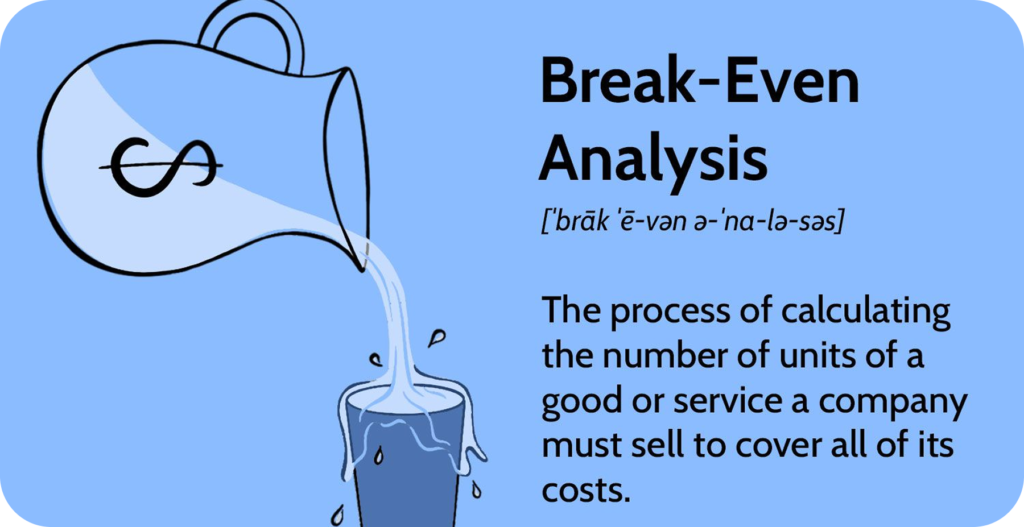
Break-even analysis is a financial tool used to calculate the point at which total revenue equals total costs. At this level, the business neither makes a profit nor incurs a loss.
The basic concept includes:
- Fixed costs (rent, salaries, insurance)
- Variable costs (materials, direct labor, production costs)
- Sales price per unit
The break-even point answers a simple but important question:
How much must we sell to avoid losses?
Why Break-Even Analysis Matters Before Expansion?
Expanding a business increases both fixed and variable costs. Without proper evaluation, companies may overestimate demand or underestimate costs.
Break-even analysis helps businesses:
- Evaluate the financial viability of expansion
- Understand the impact of increased costs
- Set realistic sales targets
- Reduce financial uncertainty
- Make data-driven investment decisions
For SMEs in Finland, this analysis provides a clear financial foundation before committing resources to growth.
Key Components
1. Fixed Costs
Fixed costs remain constant regardless of production levels.
Examples include:
- Office rent
- Salaries
- Equipment leases
- Insurance
During expansion, fixed costs usually increase, making break-even analysis even more important.
2. Variable Costs
Variable costs change based on production or service levels.
Examples include:
- Raw materials
- Production expenses
- Sales commissions
Understanding how these costs behave is essential for accurate calculation.
3. Contribution Margin
Contribution margin is the difference between sales revenue and variable costs. It shows how much revenue contributes toward covering fixed costs.
A higher contribution margin reduces the break-even point and improves profitability potential.
Using Break-Even Analysis for Expansion Decisions
Before expanding, businesses should evaluate multiple scenarios.
Through break-even analysis, companies can:
- Estimate the required sales volume after expansion
- Evaluate pricing strategies
- Assess the impact of increased operating costs
- Compare different expansion options
For example, opening a new location or hiring additional staff increases fixed costs. Break-even analysis shows how much additional revenue is required to justify these decisions.
Common Mistakes Businesses Make
Many companies perform expansion without a detailed financial analysis.
Common mistakes include:
- Underestimating fixed cost increases
- Ignoring variable cost fluctuations
- Overestimating demand
- Setting unrealistic pricing strategies
These mistakes increase financial risk and delay profitability. Structured analysis helps avoid these issues.
Break-Even Analysis and Risk Management
Break-even analysis plays a key role in reducing financial risk.
It helps businesses:
- Identify minimum performance requirements
- Plan for worst-case scenarios
- Improve cost control strategies
- Strengthen financial planning
This proactive approach ensures that expansion decisions are based on realistic expectations rather than assumptions.
How Nordic Talous Oy Supports Expansion Planning?
Nordic Talous Oy helps Finnish SMEs perform detailed financial evaluations before expansion.
Their support includes:
- Cost structure analysis
- Break-even calculations
- Profitability assessment
- Scenario planning
- Integration with budgeting and forecasting
This ensures that growth decisions are financially sustainable and aligned with business objectives.
Conclusion
Expansion can drive growth, but it also increases financial exposure. Without understanding the relationship between costs and revenue, businesses risk scaling without achieving profitability.
Break-even analysis provides clarity by defining the minimum performance required to succeed. For Finnish SMEs, it serves as a critical tool for evaluating expansion decisions, managing risk, and ensuring sustainable growth.